Get in Touch
Please outline the details of your enquiry below
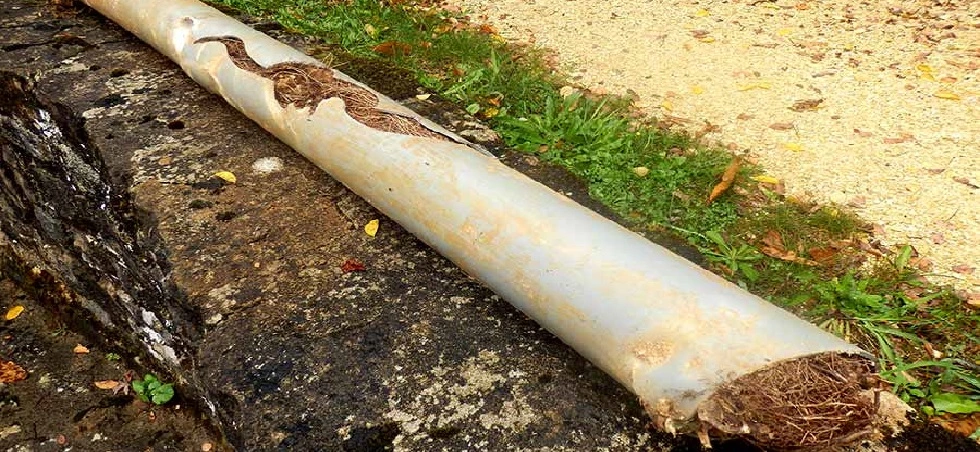
The yard floods after every heavy rain. You check the grates, clear the leaves, maybe run a hose down the downpipe. Everything looks fine – until the next storm, and the same corner of your yard turns into a pond again. The real problem is what’s happening metres underground.
Most Adelaide homeowners blame surface debris – and they’re not wrong to. Leaves, gum bark, and garden clippings accumulate over grates and slow things down. But that’s rarely the whole story. Underneath, you often have compacted silt, root systems that have worked through pipe joints, or structural damage building quietly for years before a heavy rain event exposes it.
Two things make Adelaide stormwater problems worse than most cities. First, the pipes. Most homes built before the 1980s have clay or earthenware stormwater pipes installed in short sections, joined with cement mortar. Over decades, those joints crack – and that’s all tree roots need.
Second, the soil. Much of Adelaide sits on reactive clay that swells in winter and contracts in summer. That movement misaligns pipe joints, flattens the drainage gradient, and creates low points where silt collects and water stalls. In established suburbs with mature gum trees, both problems often arrive together.
Stormwater systems rarely fail without warning. Watch for:
Any one of these is worth a look. Two or more together usually means something structural is happening underground.
Surface fixes work on surface problems. A blocked grate cleared of leaves will drain freely – until the next downfall pushes more debris through. But root intrusion, a bellied pipe (where a section sags and traps sediment), or a partially collapsed section of clay pipe can’t be reached from above. The water has nowhere to go because the pipe itself is compromised, not just the inlet. A plunger and a hose won’t reach that.
This is where the guesswork ends. A waterproof camera fed through the pipe sends back live footage – the exact location of root intrusion, where a joint has cracked, where a section has collapsed or bellied. No excavation required.
At LPGS, we use CCTV technology to diagnose stormwater issues before recommending any work. The fix for compacted silt is different from the fix for a collapsed pipe – and treating the wrong problem costs you twice.
Stormwater damage is cumulative. Every winter storm that backs up against your foundation does a little more work. If your yard floods regularly or your drains are slow without a clear reason, Lucas Plumbing and Gas Solutions can run a full CCTV stormwater inspection and tell you exactly what’s happening – before it becomes a structural problem. Call (08) 8004 0040, available 24/7 across Adelaide.
1. Who’s responsible for stormwater drains on my property?
You are, for everything within the property boundary. SA Water manages the street infrastructure – your side of the connection is your responsibility.
2. Can tree roots damage stormwater pipes?
Yes – in older Adelaide suburbs with clay pipes and established gum trees, root intrusion is one of the most common causes of repeat blockages.
3. Do I need to excavate to find the problem?
No. CCTV inspection identifies the issue from inside the pipe without any digging.
4. How often should stormwater drains be inspected?
Annually is sensible – ideally in autumn, before June’s rainfall puts the system under load.


Recent Comments