Get in Touch
Please outline the details of your enquiry below
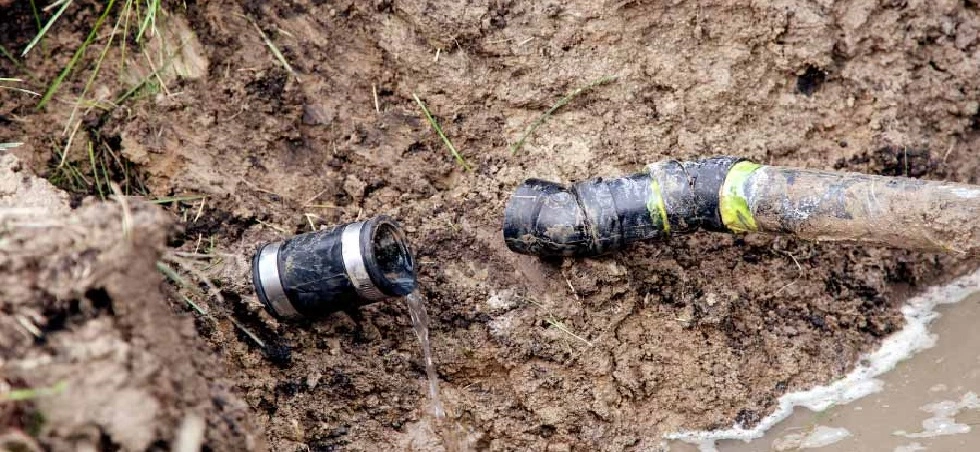
A dripping tap is impossible to ignore. You hear it, see it, and it bothers you until it’s fixed. A cracked pipe sitting two metres underground? That one stays quiet for months, sometimes years, while it does far more damage than any leaking tap ever could.
Underground pipe problems don’t announce themselves with a drip. They show up as a patch of lawn that’s suspiciously lush in the middle of a dry Adelaide summer, or a crack in your path that appeared without explanation, or a faint sewage smell you can’t quite place. By the time anything looks wrong on the surface, the damage below has usually been building for a while.
These are the warning signs worth acting on:
Two or more of these signs together and something is very likely happening below ground.
Most Adelaide homes built before the 1980s have clay or earthenware pipes underground, laid in short sections joined with cement mortar. Those joints deteriorate over decades without anyone noticing. Tree roots, a common feature in established suburbs like Burnside and Wattle Park, find weakened joints and work their way through. Soil movement does the rest.
Much of Adelaide sits on reactive clay that expands in winter when wet and contracts sharply through the dry summer heat. That constant seasonal shift puts real pressure on underground pipes, stressing and flexing them beyond what they were designed to handle. A small crack develops, water escapes into the surrounding soil, and the saturated clay in that one spot starts to swell more than the ground around it. That uneven expansion pushes against your concrete slab. Walls crack. Doors stick. What began as a hairline fracture in a pipe quietly becomes a structural problem.
Underground pipe damage is cumulative. There’s no point at which it stabilises and stops getting worse on its own. Every week the surrounding soil stays saturated, it works on your foundation a little further. What might have been a manageable pipe repair becomes a far bigger job once structural damage has entered the picture – and none of that escalation was inevitable if the pipe had been caught and fixed early.
You can’t determine what’s happening underground from the surface. A wet patch and a sewage smell tell you something is wrong, not where it is or what caused it. At LPGS, we use CCTV drain camera technology to look directly inside the pipe – pinpointing the exact location and nature of the damage before any repair work starts. Root intrusion, a sagging section, a cracked joint, a collapsed run – each requires a different fix, and the camera identifies which one we’re actually dealing with. No guesswork and no unnecessary excavation just to find the problem.
A soft patch of lawn, an unexplained crack, a smell you can’t trace – these things are worth a call before they develop into something more serious. Lucas Plumbing and Gas Solutions can run a full CCTV underground pipe inspection and tell you exactly what’s happening below ground. Call (08) 8004 0040, available 24/7 across Adelaide.


Recent Comments